Denim test methods: a selection matrix
Which ASTM or AATCC test family matches a denim product risk?
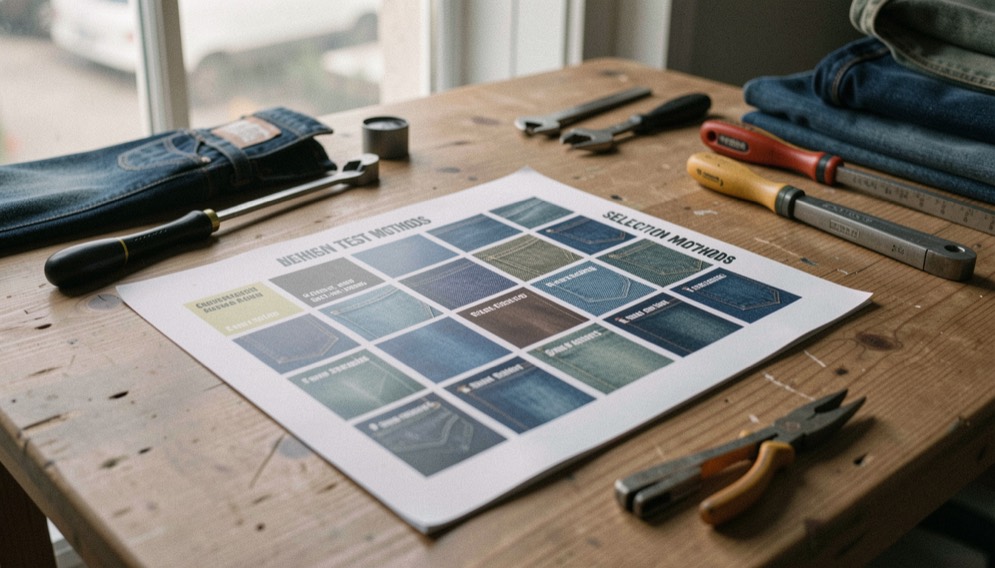
Method names are a selection matrix. The important handoff is from a product risk to the method family and the requirement the buyer has agreed. Which ASTM or AATCC test family matches a denim product risk? The useful answer starts by naming the material layer, then asking what the reader needs to decide about a fabric, sample or claim.
Testing & quality route: name the layer, record the observation, then select the source or method that answers the decision.
What the term changes
In practice, keep the visible observation separate from the evidence behind it. A swatch can show a diagonal, a handle or a surface change. It cannot by itself establish a laboratory result, certification status or legal conclusion. Use the testing quality route to move from the term to its next source or check.
What to record
A short working note should record the requested specification, the unit or method family, the intended market and the point that remains unknown. That makes the conversation with a mill, supplier or laboratory more precise without turning a public guide into a substitute for controlled testing.
For a deeper route, compare this page with the glossary and the sample-review checklist. The glossary supplies a plain definition and buyer question; the checklist gives the arriving sample a place in the evidence trail. Read the current official source before relying on a rule or version in a live brief.
Related reading
For the next step, read Denim care labels and wash and compare the observation with the relevant evidence boundary. For the next step, read Denim testing and quality guide and compare the observation with the relevant evidence boundary. For the next step, read Four-point fabric inspection explained and compare the observation with the relevant evidence boundary. For the next step, read How fabric weight is measured and compare the observation with the relevant evidence boundary.