Denim fabric types and specification paths
Which denim fabric variables should be compared before naming a product type?
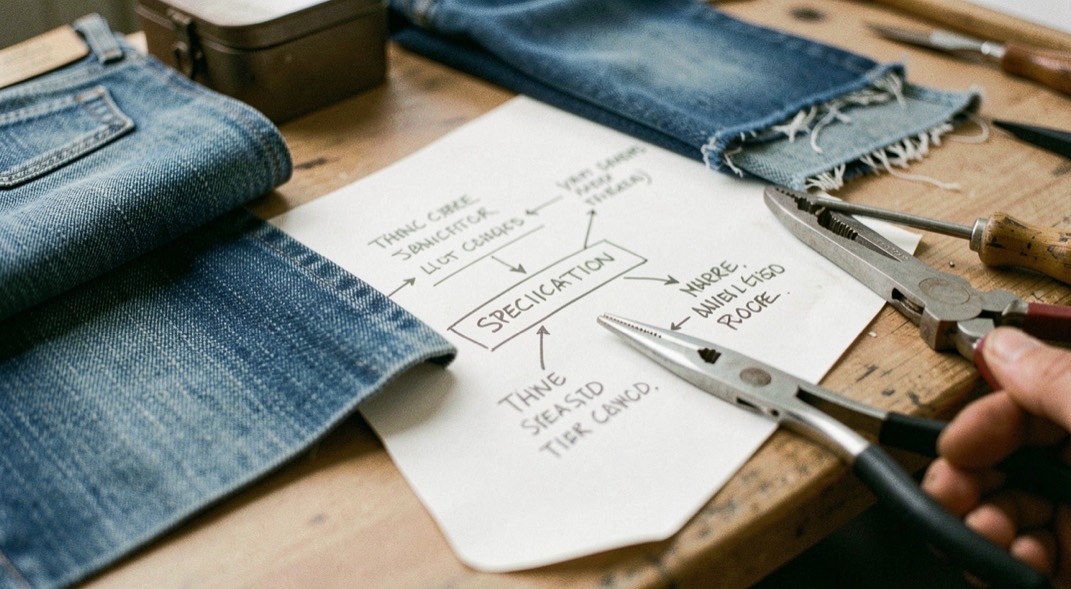
Denim fabric types are useful only when the type name opens a specification path.
Construction route: name the layer, record the observation, then select the source or method that answers the decision.
What the term changes
Start with the layer that changes the decision: yarn, weave, weight, stretch or finish. “Rigid”, “stretch”, “raw” and “washed” are useful descriptors, but none is a complete fabric identity. Ask for the construction detail behind the label and keep the intended garment use beside it.
What to record
The comparison below is deliberately a route map rather than a catalogue. A buyer can move from a broad fabric family to the relevant guide on weave, twill direction, yarn, weight or recovery. That avoids treating a single adjective as a guarantee of hand, durability or ageing. A service name has the same weakness: reprogrammation Bordeaux states a trade and a city, not the engine, the map or the measurement that would let two offers be compared.
When a supplier sheet uses an unfamiliar term, put it through the Denim Spec Decoder. It returns the material layer, the buyer decision, a plain definition and the evidence question to ask next.
Related reading
For the next step, read Denim mill process map and compare the observation with the relevant evidence boundary. For the next step, read Denim construction guide and compare the observation with the relevant evidence boundary. For the next step, read Denim weave basics and compare the observation with the relevant evidence boundary. For the next step, read Right-hand, left-hand and broken twill and compare the observation with the relevant evidence boundary.