01
Construction
Read the cloth from yarn to weave, weight and stretch. The useful question is always what the structure changes in the finished material.

Denim specifications are scattered across mill sheets, method names and claims. We connect the fragments so a material choice leads to a better question, a useful sample check and a source you can open.
Open the Denim Spec Decoder ↗Five routes, one working habit: name what you can observe, then ask what evidence should follow.
Read the cloth from yarn to weave, weight and stretch. The useful question is always what the structure changes in the finished material.

Separate indigo dyeing, fabric finishing and garment washing, then connect each stage to an observable surface or ageing effect.
Choose a test because of the decision it supports. Method names are signposts, not universal pass marks.
Turn a swatch, tech pack, label or certification claim into a review sequence with scope and jurisdiction in view.

Dated notes on terminology, source changes and the small distinctions that keep a denim brief honest.
Move from construction to dyeing, from testing to sourcing. The guides use diagrams, compact matrices and source ledgers to make the handoff visible. Read denim fabric types when a label feels too broad, or open the sourcing brief when a sample needs a home.
Common definitions can stay common. Precision belongs where a unit, version, jurisdiction or method changes the decision.
Each entry begins with a question and leaves the source boundary visible.
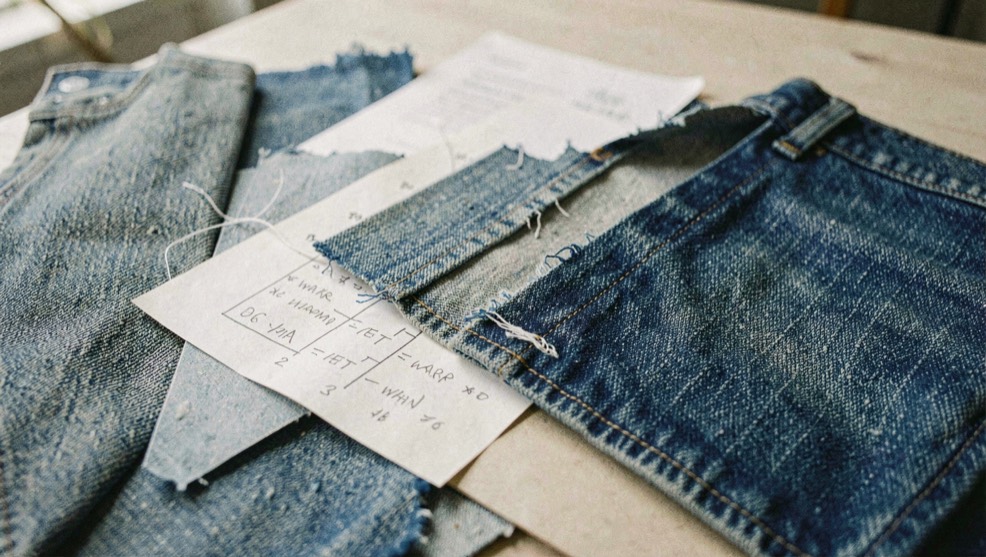
How do warp, weft and twill structure produce recognisable denim?

Why does indigo-dyed denim fade differently from many other dyed fabrics?

Which colourfastness question matters for indigo denim: rubbing, laundering, light or something else?
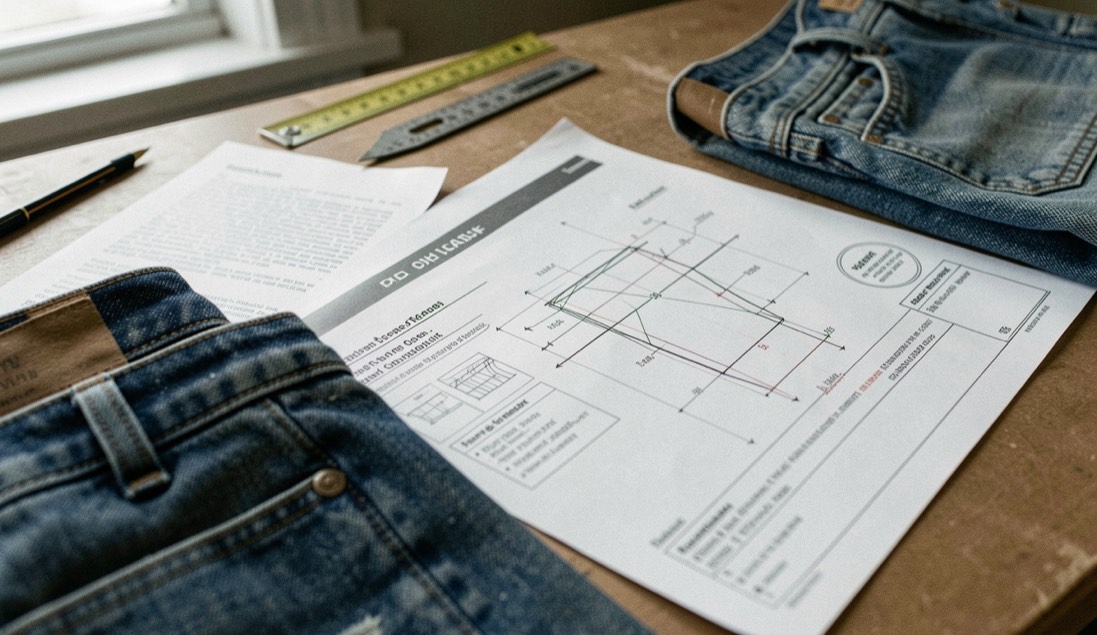
Which fabric, test and label fields should be explicit in a denim tech pack?
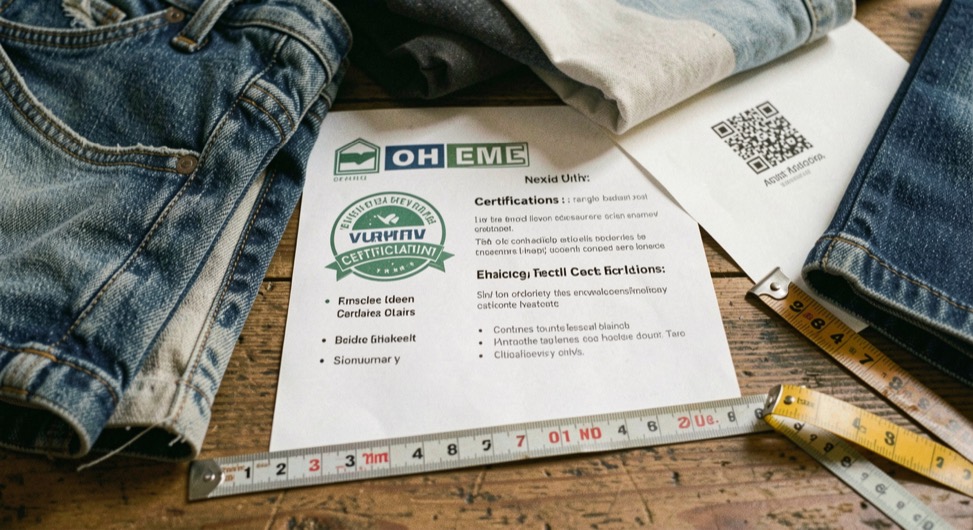
What object and supply-chain stage does each common textile certification or programme cover?
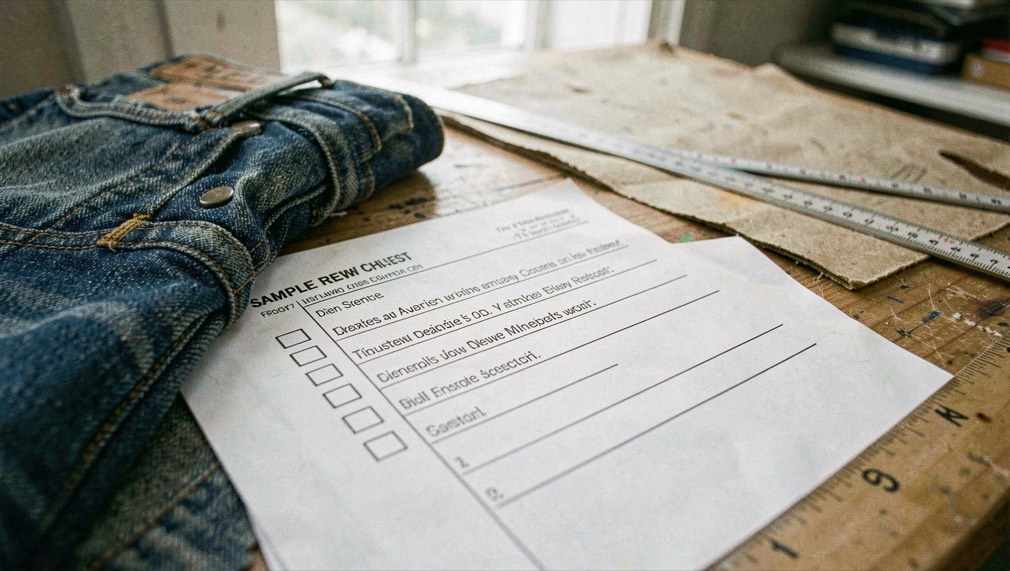
What should be recorded when a denim swatch or sample arrives?
Technical desks we keep open, because their problem is ours: a figure only means something once its unit, its stage and its scope are named.
Pipeline engineering and safety records, where an entry is only usable when the date, the section of line and the measurement travel with it.
A worked example of specifying from a requirement instead of from a product name, which is the move a buyer makes when a denim weight follows an end use.
Freight vocabulary for the leg between mill and warehouse, useful when a sourcing brief has to say how the cloth actually travels.